

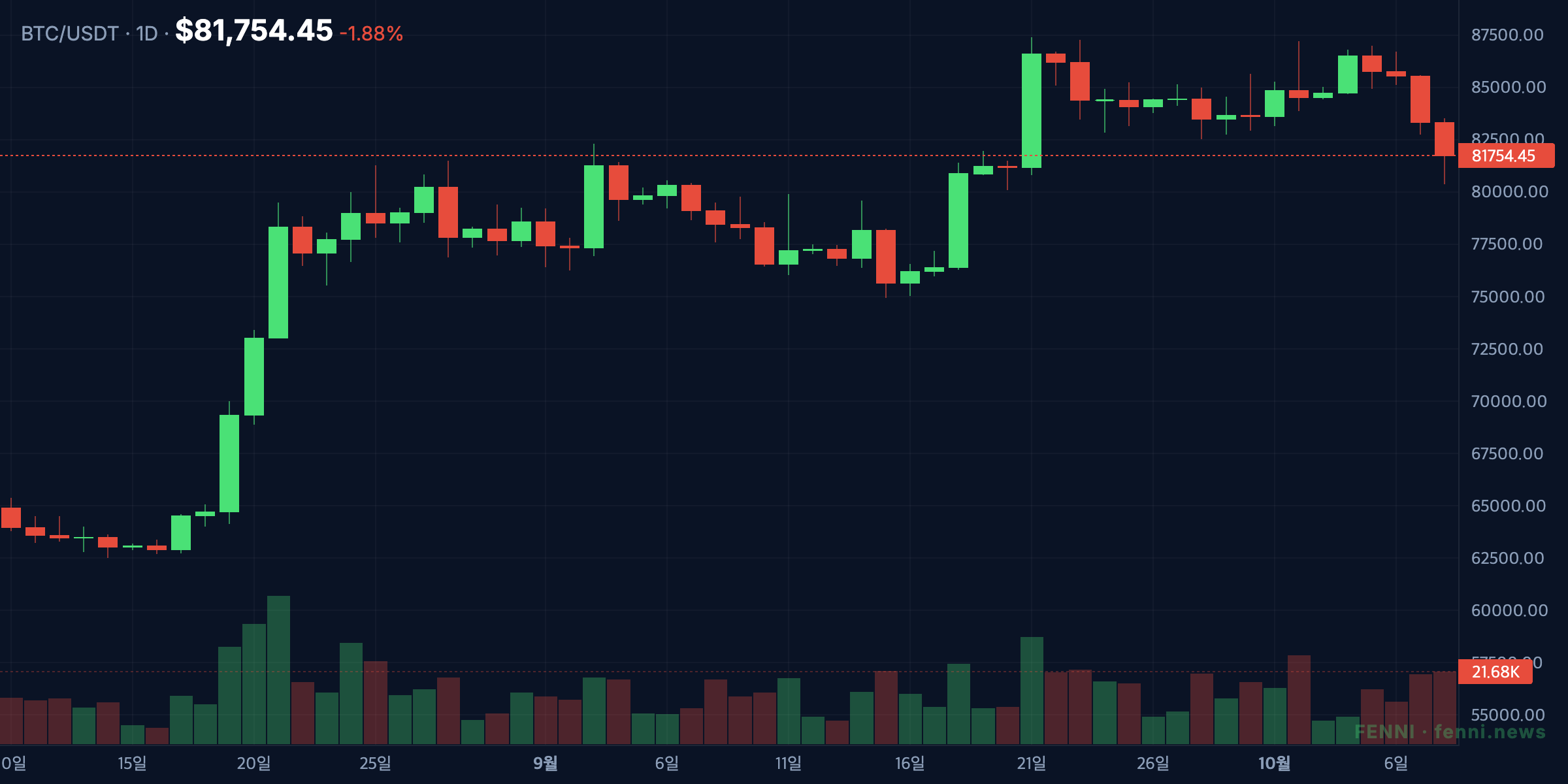
As of October 8, 2026, Bitcoin traded below $83,000, touching $82,810 as three pressures built on the market at once: U.S. Treasury yields at multi-decade highs, Brent crude holding above $100 a barrel, and spot-ETF outflows that coincided with a wave of forced long liquidations. The drop reads less like a reaction to a single headline than an unwind in which macro conditions and flushed leverage reinforced each other, per a KuCoin market report.
Why the $83K Break Matters
Bitcoin fell below $83,000 on October 8, hitting $82,810 as ETF outflows reached $90 million, according to a KuCoin market report. CoinGecko data quoted in that report put BTC near $82,810 at 08:47 UTC, with a market capitalization of roughly $1.66 trillion. The print dragged the price into the $82,000 support zone analysts had flagged as a key downside level, and it came alongside a broader unwind rather than a crypto-specific shock.
ETF Outflows: Two Windows, Two Numbers
The flow picture needs care with dates. US spot Bitcoin ETFs posted net outflows of about $487.07 million on October 7 — their heaviest single-day withdrawal in weeks, after taking in $118.86 million on October 6 — according to SoSoValue data cited by CryptoTimes. The $90 million figure in the KuCoin report is a separate, smaller reading whose exact session window the report does not specify. The two figures should not be merged or read as consecutive sessions.

Yields and Oil Set the Macro Backdrop
The 10-year U.S. Treasury yield has climbed above 5.3%, its highest since 2002, while the 30-year sits at multi-decade highs, per the same KuCoin report. The report’s framing: borrowing costs this high make risk-free debt unusually attractive, weighing on assets that produce no cash flow. Oil added the second pressure: Brent crude has pushed above $100 a barrel on Middle East supply concerns, and the report treats costly energy as a force that feeds inflation expectations and keeps central banks hawkish.
Investing.com’s tape told the same story intraday: Bitcoin extended its recent slide on Thursday as oil’s more-than-3% jump and weakness in U.S. technology stocks soured risk appetite. Losses were capped as a U.S. Treasury bond rout eased up — within-session relief, not a trend reversal.
Liquidations Broadened Beyond Bitcoin
The unwind was crypto-wide. Ether hit a 24-hour low of $2,596.36 on Binance, while Ether futures liquidations reached about $176.16 million over the prior 24 hours, according to TokenPost. Solana and XRP fell 3.0% and 3.8% respectively in the same session per the KuCoin snapshot, consistent with leveraged longs being closed across the market rather than a Bitcoin-only drawdown.

The Split Market: AI Demand Held Firm
The contrast on the equity side was sharp. The Philadelphia Semiconductor Index saw its early-trading decline widen to 2%, with Arm down 4.3% and Intel off 3.5%, showing the risk-off reached chips as well. Yet underlying demand stayed intact: TSMC’s third-quarter revenue reached about NT$1.49 trillion ($46.7 billion), up 50% from a year earlier and exceeding the NT$1.46 trillion estimate, and September net revenue came in at NT$511.86 billion ($16.03 billion), up 54.6% year over year. AI-linked fundamentals and crypto risk appetite moved in opposite directions — no causal link between the two is established by these data.
What to Watch From Here
Three items frame the next session: whether ETF flows stabilize or extend the outflow streak, the path of Treasury yields and oil as the inflation backdrop, and how far the liquidation wave runs before leverage resets. Support near $82,000 and the session’s partial yield relief are the near-term markers — watch items, not forecasts.
Disclaimer: This article is for informational purposes only and does not constitute financial advice. Cryptocurrency investments carry significant risk. Always conduct your own research before making investment decisions.