
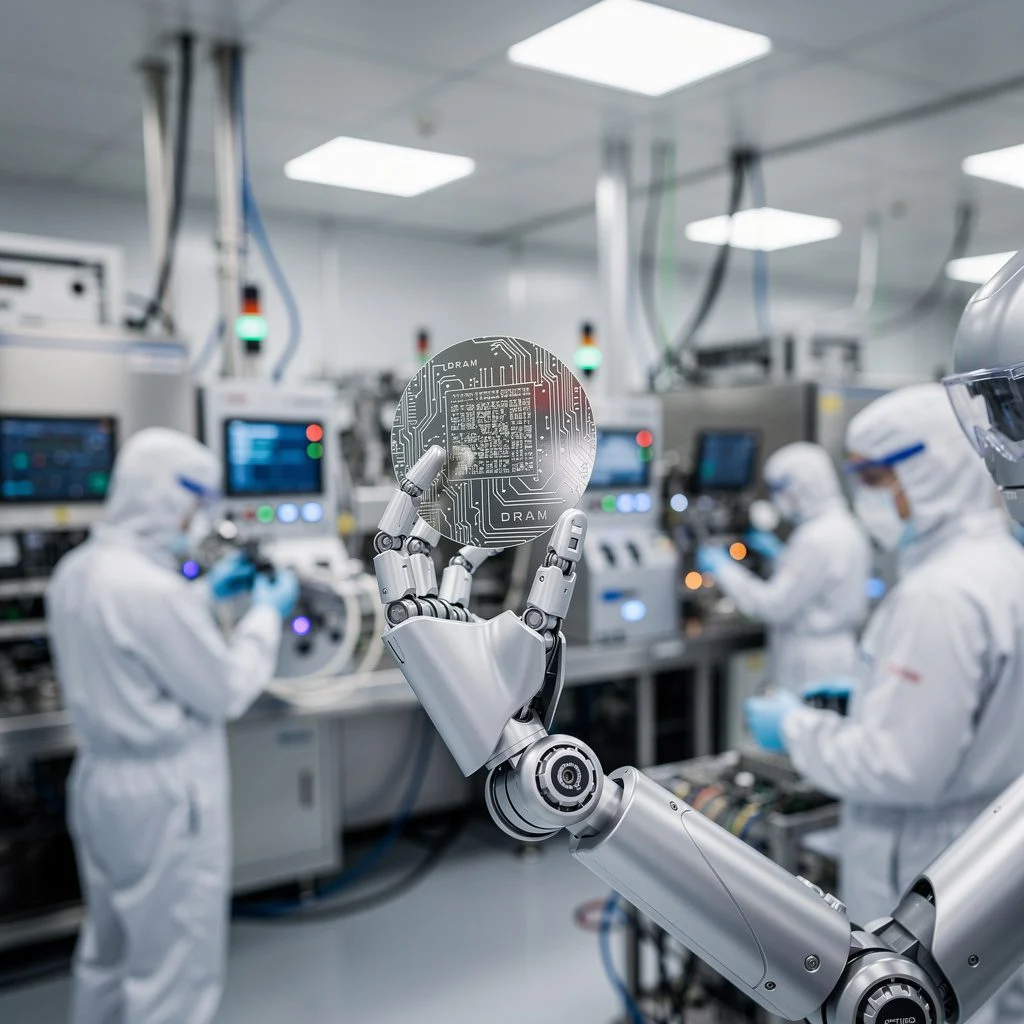
As of October 12, 2026, humanoid robots are emerging as memory’s newest demand pocket: Counterpoint Research forecast on October 11 that the industry’s total DRAM demand will grow from about 8,300 terabits in 2026 to about 172,000 terabits by 2030 — nearly twentyfold — per News1.
Key Takeaways
- ▲ Counterpoint’s October 11 forecast: total humanoid-robot DRAM demand grows from about 8,300 terabits in 2026 to roughly 172,000 terabits by 2030, nearly 20x.
- ▲ Blended DRAM per robot more than doubles from 19GB in 2026 to 39GB in 2030, with low-power DRAM and high-capacity NAND — not HBM — as the mainstay.
- ▼ China’s CXMT plans to ship 4F²-cell DDR5 RDIMM before end-2026, about two years ahead of Samsung’s 2028 timeline, per a Wccftech report carried by Global Economic.
- ■ A Yuanta Securities analyst ties 85.5 trillion won of foreign net selling of Samsung shares since the start of 2026 (Money Today, October 11) to Korea’s higher discount rate rather than industry deterioration.
A Nearly 20x Forecast on a Four-Year Clock
휴머노이드 로봇 산업 전체 D램 수요는 2026년 약 8300테라비트(Tbit)에서 2030년 약 17만 2000Tbit로 20배 가까이 늘어날 전망이다. — The humanoid-robot industry’s total DRAM demand is forecast to grow nearly twentyfold, from about 8,300 terabits in 2026 to about 172,000 Tbit in 2030. (News1)
Donga Ilbo puts the multiple at 20.7x.
Why Each Robot Needs Twice the Memory
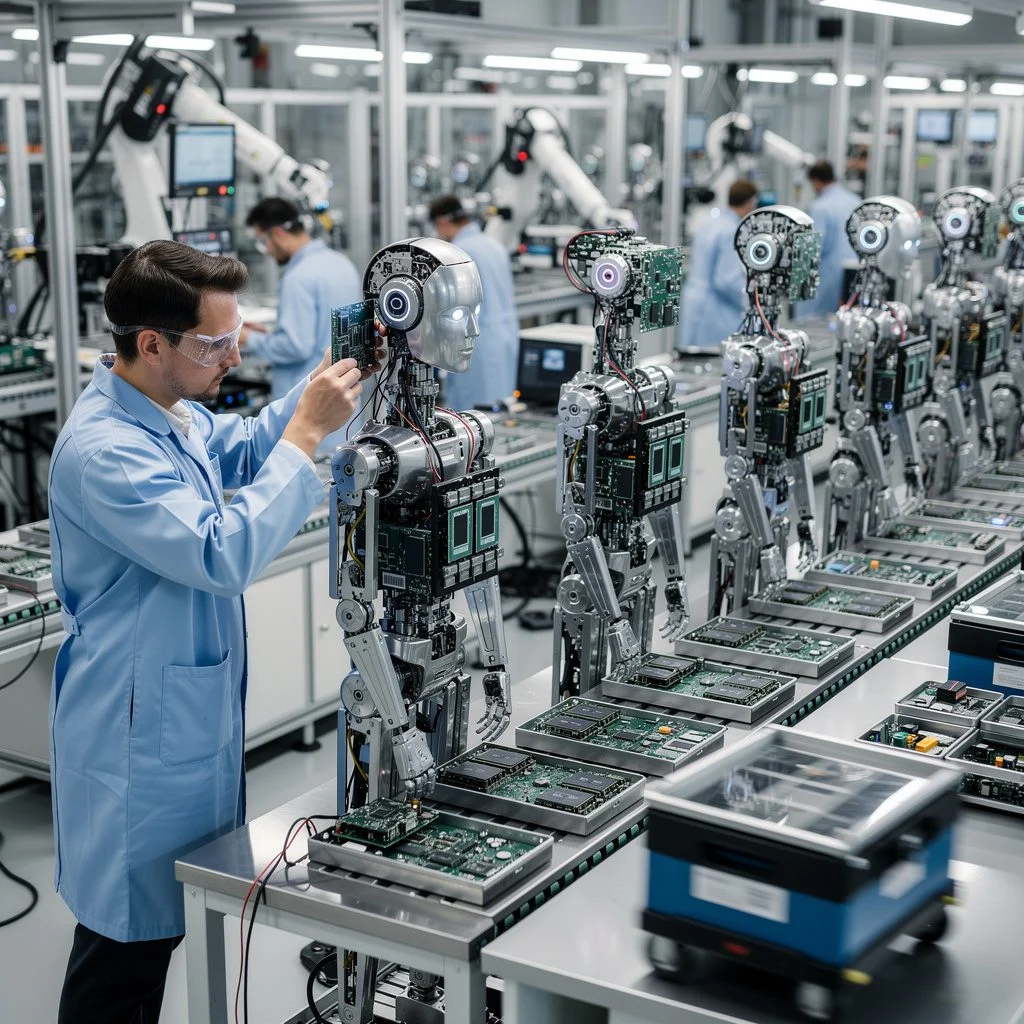
Counterpoint expects demand to compound as architectures shift from hierarchical to end-to-end designs that fuse multimodal inputs and output actions directly, with World Models raising training and deployment storage needs, per Aju News. Robot shipments and per-robot content rise together — blended DRAM per robot more than doubles from 19GB in 2026 to 39GB in 2030 — and compute-chip demand led by NVIDIA GPUs expands alongside, per Chosun Biz.
Low-Power DRAM and NAND, Not HBM
Battery-powered robots are more power-sensitive than data-center servers, so the current mainstay is low-power DRAM (LPDDR family) plus high-capacity NAND rather than HBM, with 3D DRAM the longer-term transition, per ET News.
Samsung and SK Hynix Move Early
SK hynix agreed in June with NVIDIA to co-develop next-generation memory for the Jetson Thor robot computing platform, while Samsung’s July earnings call outlined “physical AI” solutions bundling high-bandwidth and low-power memory with image sensors, foundry and advanced packaging, per Donga Ilbo.
Counterweights: CXMT, ASML and Foreign Flows
Per a Wccftech report carried by Global Economic, CXMT president Chao Kang-yu said on October 10 that the Chinese memory maker will ship 4F²-cell DDR5 RDIMM before end-2026, about two years ahead of Samsung’s 2028 adoption plan. ASML decided to raise EUV and DUV replacement-part prices 10% from January 2027, which Samsung and SK hynix accepted through their Korean subsidiaries, per a Wccftech report carried by Global Economic.
Foreign positioning diverges: foreigners net-sold 85.5 trillion won of Samsung shares since the start of 2026, per Money Today‘s October 11 report, cutting their stake to its lowest since 2008 as of the October 7 print. Yuanta Securities analyst Lee Jae-won attributed the retreat to Korea’s higher discount rate and weakened risk appetite rather than industry deterioration.
FAQ
How large is the forecast?
About 8,300 terabits in 2026 growing to roughly 172,000 terabits by 2030 — nearly 20x — per Counterpoint’s October 11 announcement.
Why not HBM?
Battery-powered robots are power-sensitive, so low-power DRAM and high-capacity NAND are the mainstay, per News1.
What complicates the Korean gain?
CXMT’s planned 4F²-cell DDR5 RDIMM release before end-2026 and ASML’s 10% parts price increase from January 2027 add pressure, per Wccftech reports carried by Global Economic.
Disclaimer: This article is for informational purposes only and does not constitute financial advice. Cryptocurrency investments carry significant risk. Always conduct your own research before making investment decisions.