

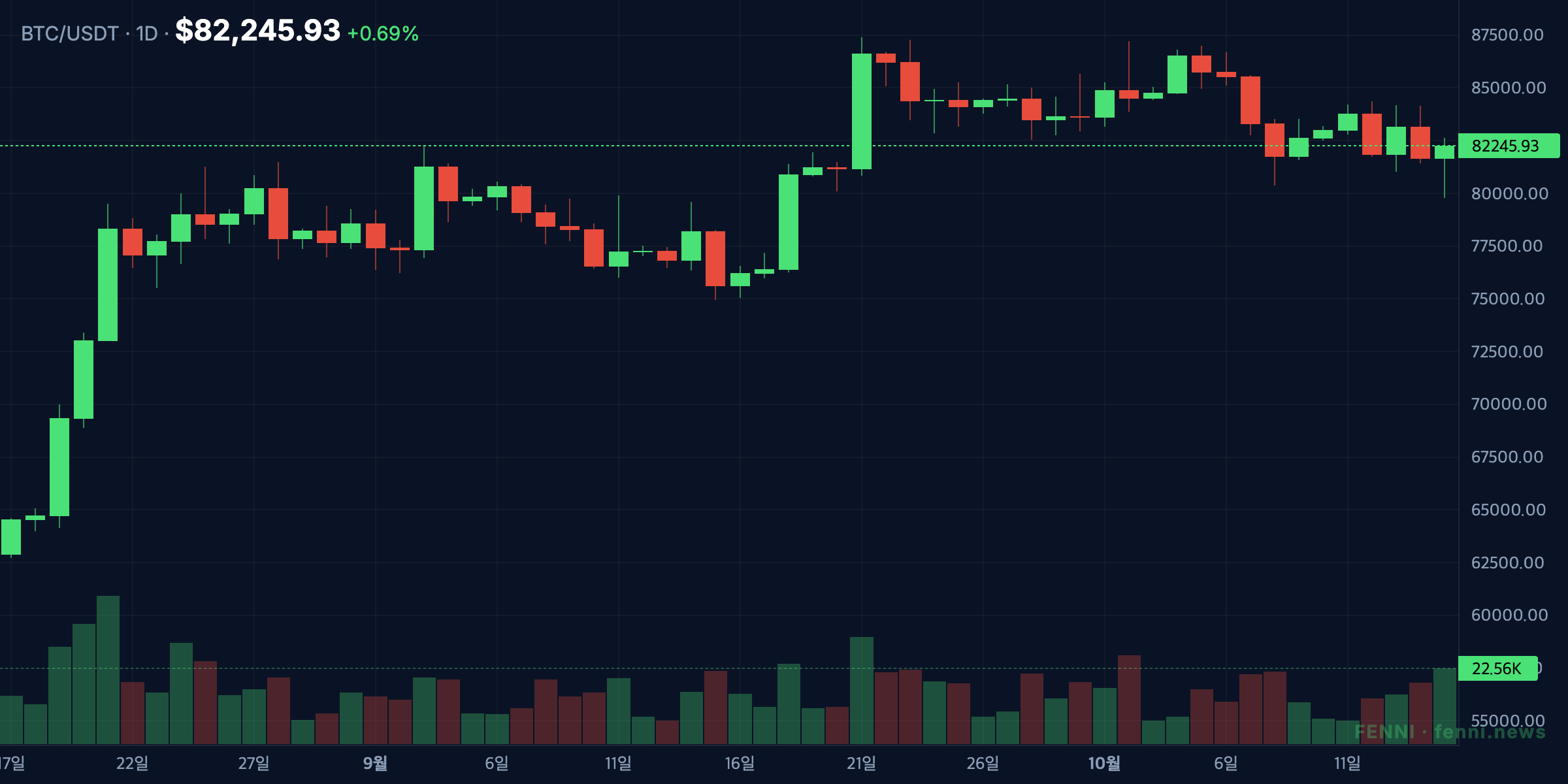
Bitcoin slipped below $81,000 on October 15, 2026, a session decline of roughly 3.2% measured from the prior day, after a hotter-than-expected U.S. inflation reading revived bets on a Federal Reserve rate increase at the October 27-28 meeting. The repricing crossed asset classes, hitting crypto and chip stocks alike.
Key Takeaways
- ▼ Bitcoin slipped below $81,000 on October 15, 2026, down roughly 3.2% over the 24 hours through that session as investors digested the latest U.S. inflation figures, according to CryptoTimes.
- ▼ September CPI rose 0.6% on the month and 3.7% from September 2025 to September 2026, with gasoline accounting for over half of the monthly rise, per BLS figures cited by CryptoTimes.
- ▼ Hike odds for the October 27-28 meeting rose from about 22%, though CME FedWatch-based figures differ by publisher — Decrypt cites roughly 44% to 49%, Seoul Economic Daily 32.7%.
- ■ Bitcoin ticked up about 0.5% to $82,080.5 later on October 15 as a bond rally lifted risk sentiment, per Investing.com — so the decline did not persist through that session.
What happened to Bitcoin’s price
Bitcoin price slipped below $81,000 on October 15, 2026, down roughly 3.2% over the 24 hours through that session as investors digested the latest U.S. inflation figures, per CryptoTimes. As of 05:50 AM UTC that day, BTC traded at $80,850 on $40 billion of volume, as per CoinGecko market data, and remained roughly 35% below its all-time high of $126,080 set on October 6, 2025.
Why the CPI print moved the market
The Consumer Price Index for All Urban Consumers rose 0.6% in September, after a 0.4% increase in August, and advanced 3.7% from September 2025 to September 2026, per CryptoTimes. Gasoline prices jumped 9.1% during the month, and the producer price index that followed also showed an outsized contribution from energy prices, Investing.com via Yahoo Finance reported.

Fed rate-hike odds, attributed per publisher
Post-release CME FedWatch pricing showed the probability of a 25-basis-point hike at the October meeting rising toward roughly 47% to 50%, from around 22% the day before, CryptoTimes reported. Decrypt reported roughly 44% to 49% odds for the same October 27-28 meeting, while Seoul Economic Daily reported 32.7%, up from 22.1%. The figures span roughly 33% to 50%, so no single number is the market’s consensus.

Spillover into chip stocks
The sell-off in chip stocks deepened as a hotter-than-expected inflation read raised worries about more rate hikes by the Federal Reserve and a higher cost of capital, Yahoo Finance reported, and Seoul Economic Daily put the Philadelphia Semiconductor Index down 4.30% for the October 14 session, with SK hynix off 6.06%. The rout extended into Asia, where a separate Yahoo Finance report on the global chip sell-off put South Korea’s KOSPI down 7%, with SK Hynix and Samsung Electronics down 11% and 9% respectively.
What to watch
Two items stay open: whether the October hike odds hold into the FOMC meeting, and whether chips stabilize.
Why did Bitcoin fall below $81,000?
Hotter-than-expected U.S. inflation data raised market-implied odds of a Federal Reserve rate increase later that month, pushing bitcoin down roughly 3.2% over the 24 hours through October 15, per CryptoTimes.
What are the odds of a Fed rate hike in October?
They differ by publisher: CryptoTimes cites roughly 47% to 50%, Decrypt roughly 44% to 49%, and Seoul Economic Daily 32.7% — all up from about 22%.
Did the selloff spill over into stocks?
Yes. Seoul Economic Daily reported the Philadelphia Semiconductor Index fell 4.30% on October 14, and a separate Yahoo Finance report put South Korea’s KOSPI down 7% in the following session.
Disclaimer: This article is for informational purposes only and does not constitute financial advice. Cryptocurrency investments carry significant risk. Always conduct your own research before making investment decisions.