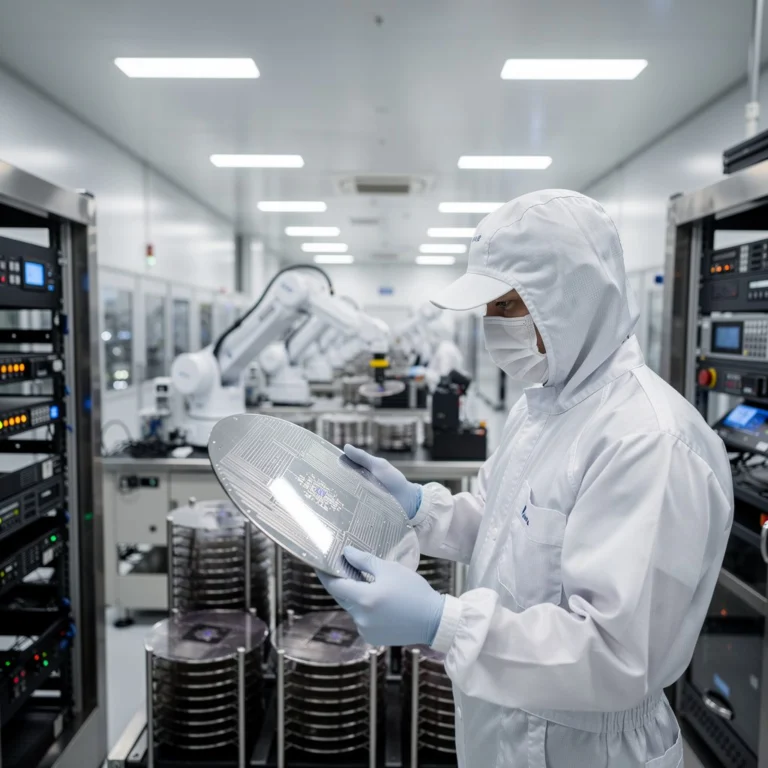

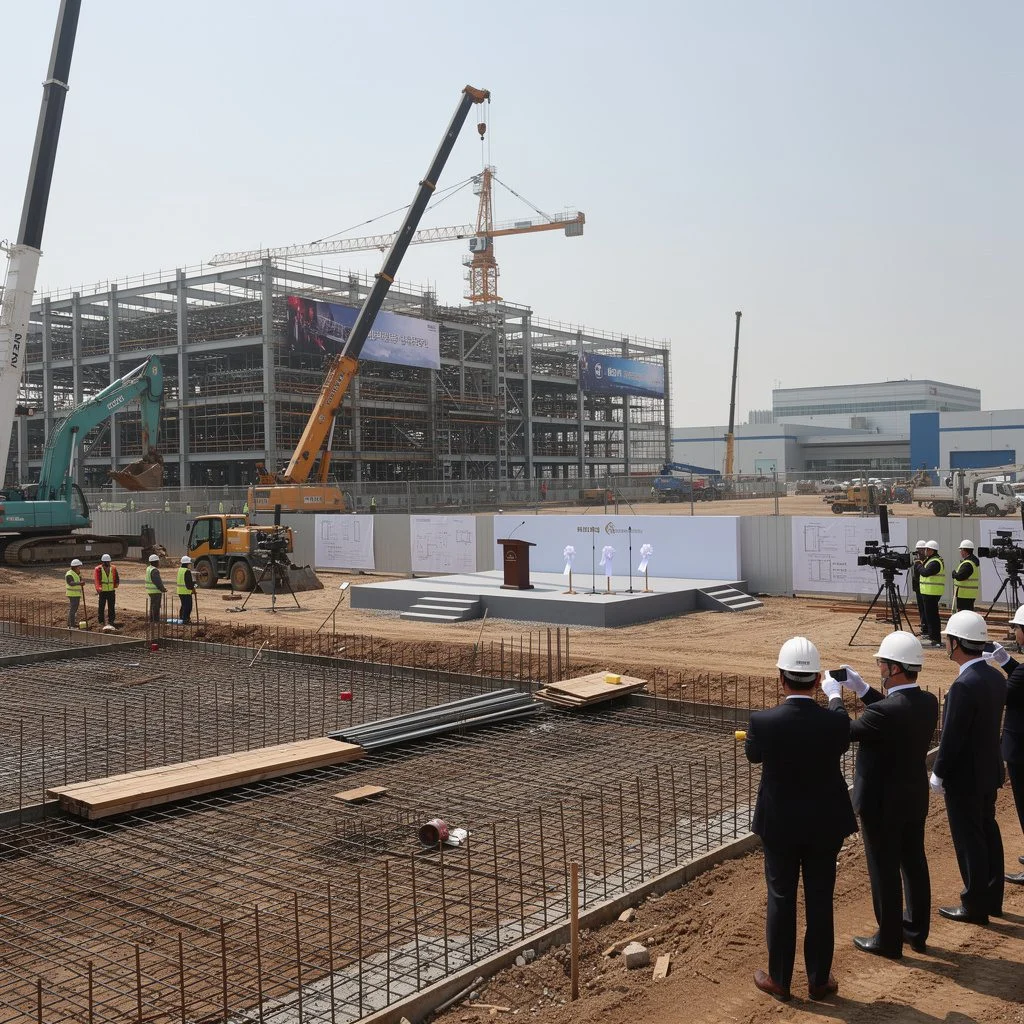
As of Thursday, November 12, 2026, Samsung has launched a 144 trillion-won investment programme across South Korea’s Chungcheong region, spanning advanced semiconductor packaging, OLED displays, AI-server substrates and batteries — with a 46 trillion-won conversion of its Onyang campus into a cutting-edge HBM hub at the centre. President Lee Jae-myung and Chairman Lee Jae-yong attended the groundbreaking that day, according to THE ELEC.
Key Takeaways
- ■ The 144 trillion-won total spans four affiliates: Samsung Electronics 60 trillion, Samsung Display 67 trillion, Samsung Electro-Mechanics 8 trillion and Samsung SDI 9 trillion won.
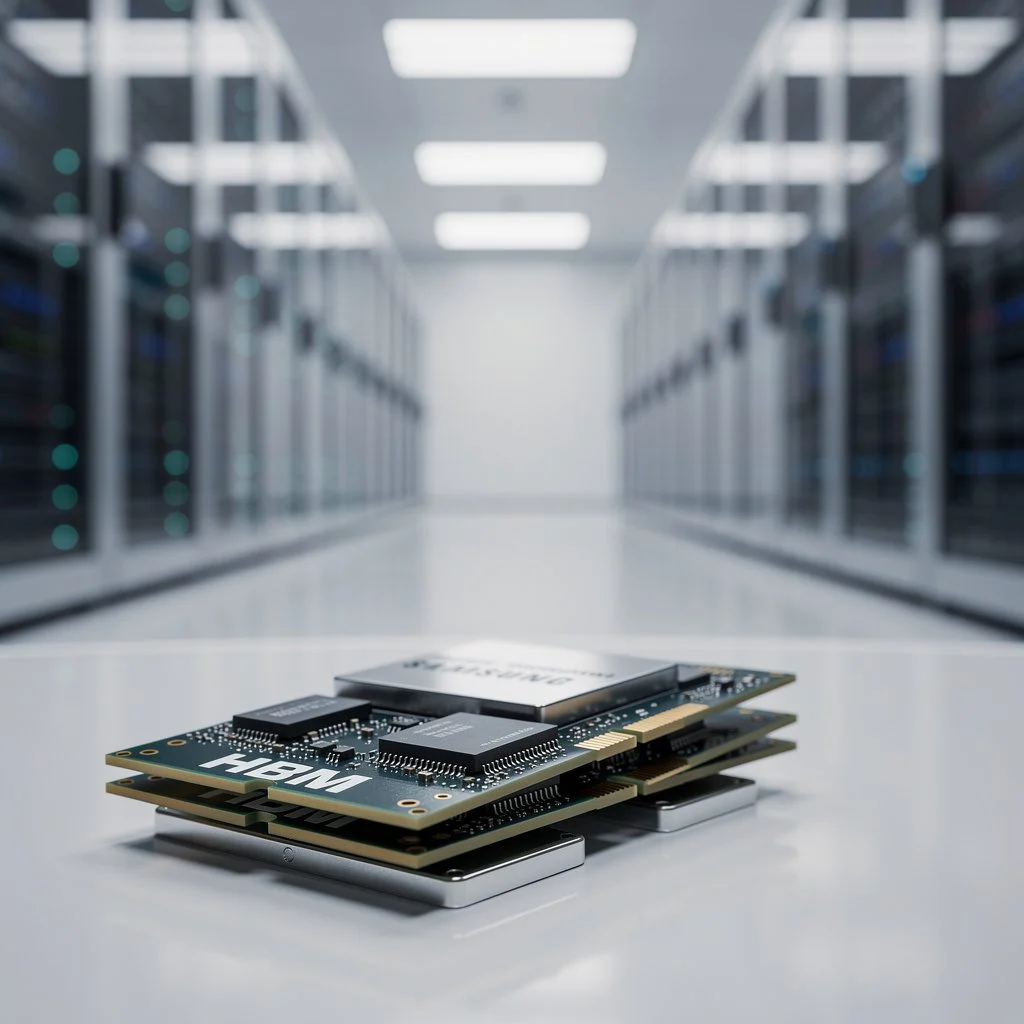
- ▲ Samsung Electronics is phasing in 46 trillion won at Onyang for five HBM lines, targeting June 2028 operation, about a year earlier than planned.
- ■ Counterpoint Research data cited by ET News put 2Q26 global HBM revenue share at SK hynix 50%, Samsung 33% and Micron 17%.
- ▼ Chinese data-centre customers are cutting eSSD orders, and memory makers are reallocating some of that volume to US customers, ZDNet Korea reported.
A 144 trillion-won bet spread across four affiliates
Samsung’s plans allocate 60 trillion won to Samsung Electronics, 67 trillion won to Samsung Display, 8 trillion won to Samsung Electro-Mechanics and 9 trillion won to Samsung SDI for advanced packaging, OLED panels, AI-server substrates and batteries, THE ELEC reported. Suppliers are moving alongside them: 194 equipment and materials partners plan roughly 18.1 trillion won of investment by 2030.
Why Onyang is being rebuilt around HBM
The Onyang spend is phased at 46 trillion won — 6 trillion won for new fab construction and 40 trillion won for advanced equipment, Digital Daily reported. Line 5, the first new building, is a three-storey facility with a cleanroom of about 31,000 square metres. Construction is running about a year ahead of the original schedule, with June 2028 as the operation target, ZDNet Korea reported. The fab is to make next-generation HBM4E. On completion, campus floor area is to grow from 270,000 to 420,000 square metres, about 1.6 times, Yonhap reported.
Retrofitting cannot carry the next generations: from HBM4, stacking rises from 12 to 16 layers and a foundry logic process is applied to the base die, ET News reported, and that report frames stabilising bonding yield before June 2028 as the make-or-break factor. The same report cites Counterpoint Research data putting global HBM revenue share in the second quarter of 2026 at SK hynix 50%, Samsung Electronics 33% and Micron 17%, with Samsung more than doubling from 15% a year earlier.
Demand is shifting, not disappearing
Samsung Electronics, SK hynix and other memory makers decided to reassign some enterprise SSD volume previously under discussion with Chinese customers to US customers, ZDNet Korea reported on November 12. The trigger described is order cuts by major Chinese data-centre firms, of which the report cites Alibaba, Baidu and Tencent as examples. Industry sources in the report say the shortage could persist into next year and the year after.
The squeeze reaches startups
AI-chip fabless startup HyperExcel asked Samsung Electronics’ foundry for 20,000 accelerators and was allocated 10,000 first because of order saturation, and requested 100,000 LPDDR5X chips from SK hynix but secured only part of that, its CEO told THE ELEC — the startup’s statements as reported, not supplier confirmations. SK hynix, meanwhile, said its LPDDR5X earned IEC 61508 SIL 3 functional-safety certification and ISO/SAE 21434 cybersecurity certification, and it plans to expand into autonomous-driving platforms, software-defined vehicles, robots and edge AI, ZDNet Korea reported on November 11.
Frequently asked questions
How much is Samsung investing in the Chungcheong region?
144 trillion won in total across four affiliates, of which Samsung Electronics accounts for 60 trillion won, according to THE ELEC.
When is the Onyang HBM line due to start operating?
June 2028 is the target for Line 5, which is being built about a year earlier than the original plan, per ZDNet Korea. The facility is to produce next-generation HBM4E.
Why are Chinese data-centre customers cutting eSSD orders?
ZDNet Korea reports that tighter US AI export controls left Chinese buyers short of GPUs and HBM, reducing tied memory requirements, and that Samsung and SK hynix are reassigning part of that volume to US customers.
Disclaimer: This article is for informational purposes only and does not constitute financial advice. Cryptocurrency investments carry significant risk. Always conduct your own research before making investment decisions.