

As of October 3, 2026, Aave (AAVE) is changing hands at $179.86, down 2.52% over the last 24 hours, per CoinMarketCap‘s snapshot taken at 07:25 UTC. The move arrives one day after Cointelegraph reported that an exploit involving a third-party module built on top of the lending protocol drained roughly $305,000 — an incident founder Stani Kulechov said left Aave v3 itself untouched. This post is a neutral introduction to Aave and its token, framed around that verified market snapshot and the confirmed news flow.
What Is Aave?
According to the project’s own website, Aave is “a decentralised non-custodial liquidity protocol where users can participate as suppliers or borrowers.” Founded in 2017, the protocol describes itself as “the world’s largest onchain lending network” and reports net deposits of $33.5 billion and more than 2.5 million users — figures the project states about itself and that have not been independently verified. Note that this self-reported deposit figure is defined differently from the $17.75 billion total value locked shown on CoinMarketCap; the two metrics are not interchangeable and should not be added together.
AAVE is the protocol’s governance token. Per the project documentation, holders govern the protocol, and the token is staked in the Safety Module, which acts as a backstop that can be drawn down to cover shortfall events.
Listing and Market Snapshot

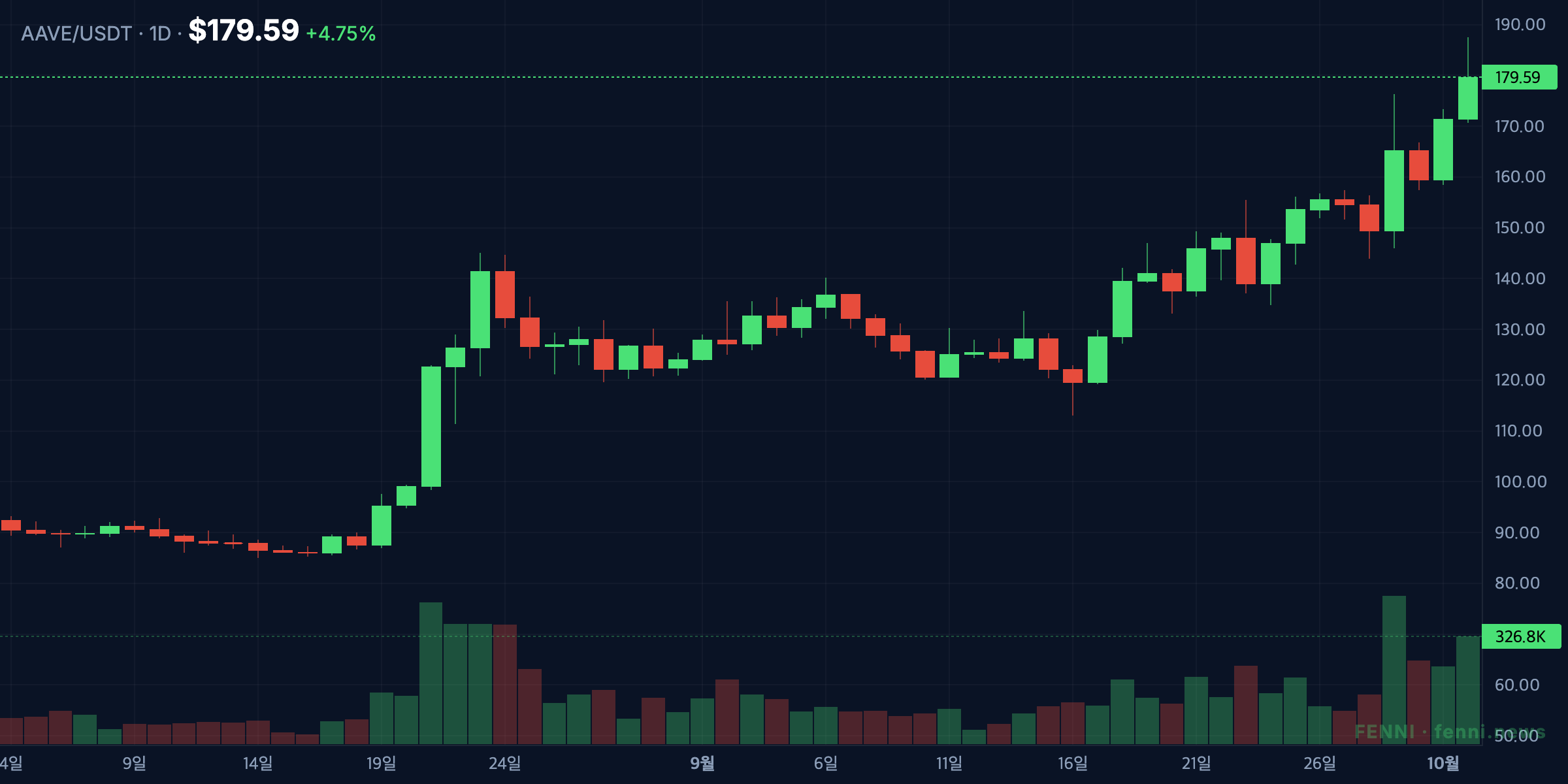
From the CoinMarketCap snapshot at 2026-10-03T07:25:05Z: price $179.86, down 2.52% in 24 hours, on 24-hour volume of about $572.74 million. The 24-hour range ran from $176.74 to $186.06. Market cap stood near $2.77 billion (rank #36), with a fully diluted valuation of $2.87 billion and circulating supply of roughly 15.43 million AAVE against a 16 million total supply. The token’s all-time high of $666.86 was set on May 18, 2021, leaving it about 73.04% below that level. Snapshot data is fetch-time live and drifts after capture.
Why It Is Moving
No confirmed catalyst links the price move to any single event: with one price snapshot and a timing gap between the news and the data capture, causation is not established from this evidence set. What is verified is the news flow. On October 2, 2026, Cointelegraph reported that an attacker exploited a third-party adapter built on top of Aave to drain about $305,000 — roughly 114.09 ETH — from two Safe multisig wallets. Founder Stani Kulechov said on X: “This is not Aave v3 contract, it’s third party external adapter built on top of Aave, zero effect on Aave v3.”
That founder statement is an interested-party claim, and the exploit mechanics rest on a single security firm, SlowMist, as reported by a single outlet. The snapshot’s small negative move and the exploit headline simply sit side by side in time; nothing in the evidence establishes how, or whether, one affected the other.
Risks and What to Watch
- Composability risk, not protocol risk, drove the incident. Per the Cointelegraph report citing SlowMist, an access-control flaw let a fake Safe contract pass the adapter’s authorization check, and the adapter let the attacker control the router and swap transaction data. Because the FlashLoopAdapter was purpose-built to open and close leveraged Aave v3 positions, ecosystem exposure was real even though core contracts were reportedly untouched.
- Single-source reliability. The “zero effect on Aave v3” claim comes from the founder, and the exploit mechanics come from one security firm via one outlet; no second independent confirmation exists in this evidence set. Watch for corroboration from other firms or on-chain analysts.
- Snapshot volatility. The market figures here are one fetch-time capture on a token whose 24-hour range already spanned about 5% of its price; the numbers will have moved since.
Watch-items going forward: whether third-party adapter audits and Safe-integration hardening follow the incident, and whether independent sources corroborate SlowMist’s account.
Was Aave’s protocol hacked?
There is no evidence that Aave v3 core contracts were affected. The exploited contract was a third-party adapter built on top of Aave, per Cointelegraph’s reporting — with the caveats that this framing is the founder’s statement and the technical analysis comes from a single security firm.
What is the AAVE token used for?
According to the project documentation, AAVE is the governance token, and it is staked in the Safety Module as a backstop to cover shortfall events.
Where does the price data in this article come from?
From a single CoinMarketCap snapshot captured at 2026-10-03T07:25:05Z. The figure drifts after capture, and the project’s own website carries no 24-hour price figure.
Disclaimer: This article is for informational purposes only and does not constitute financial advice. Cryptocurrency investments carry significant risk. Always conduct your own research before making investment decisions.