

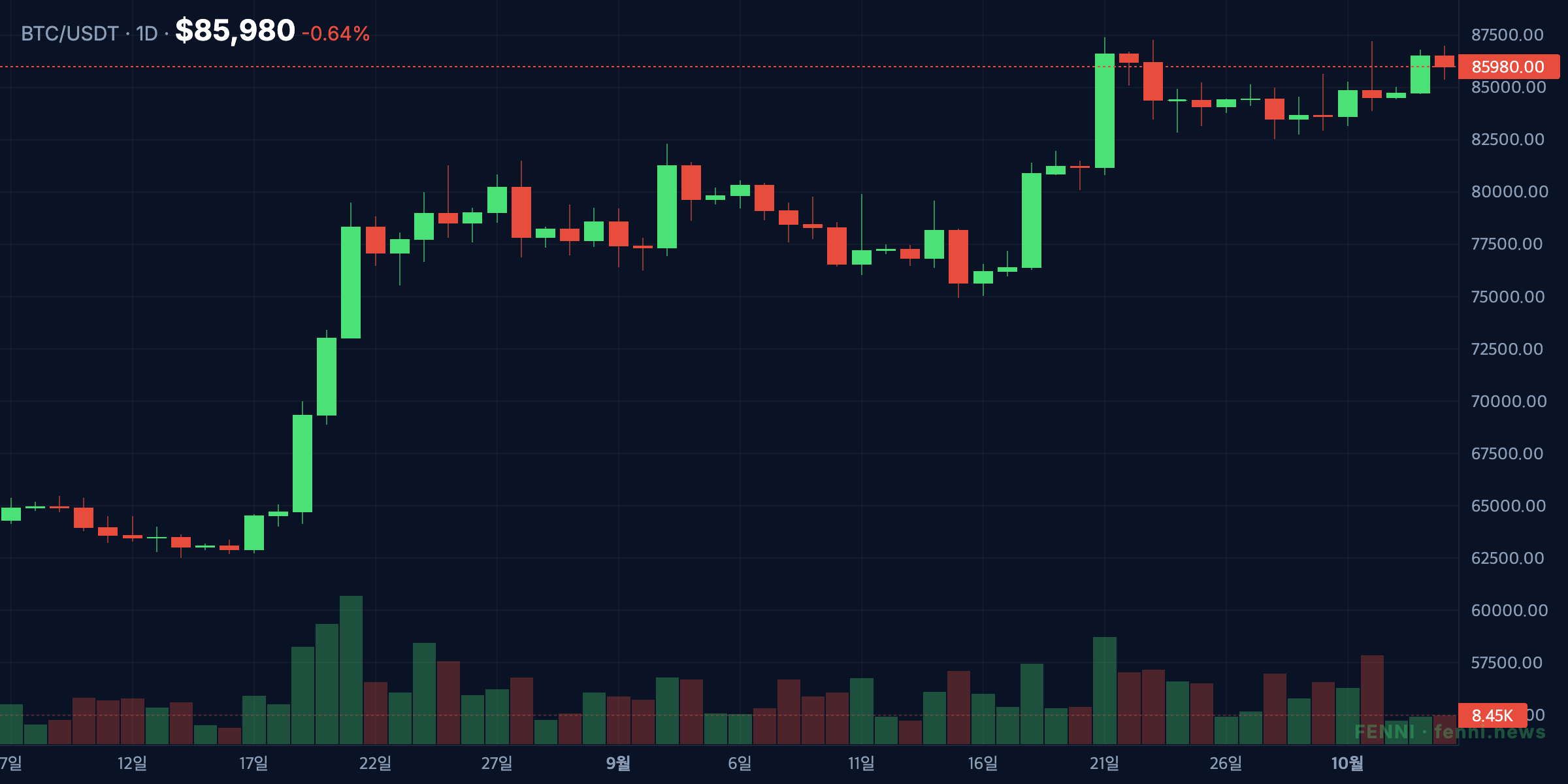
As of October 5, 2026, bitcoin sits near $86,525 after reclaiming $85,000 last week — with one open question: whether spot buyers stand behind the move. CoinStats AI, an AI-aggregated market summary page, put the price at $86,525.14, up 1.97% over 24 hours, in a session testing resistance near $87,000.
Key Takeaways
- ▲ CoinStats AI reported $2.65 billion of September spot bitcoin ETF inflows, with a further $102.7 million added on October 1.
- ▼ The rally came with shorts closing; short covering alone does not establish durable spot demand.
- ■ Resistance near $87,000–$87,300 rejected the October 2 push and remains unproven.
What Happened: The $85,000 Reclaim
crypto.news reported that bitcoin reclaimed $85,000 on October 2, ahead of the 8:30 a.m. ET September Employment Situation release, with short positions closing and a softer dollar. Bitcoin.com News reported a volatile “Uptober” open — a swing back to $85,000 on October 1 — in a two-way market where long positions, not shorts, took 60% of bitcoin liquidations.
Why It Moved: Short Covering, Rate Expectations, ETF Flows
The clearest mechanical driver was closing pressure. As crypto.news put it, “Short liquidations require buying to close, but alone cannot establish durable new spot demand.” Flows were mixed — CoinStats AI reported $2.65 billion of September spot ETF inflows, while crypto.news noted a $148.7 million outflow on September 30. Bitcoin.com News reported that Citigroup raised its 12-month bitcoin target to $113,000, forecasting $5 billion in net ETF inflows.
Will Buyers Stay After the Jobs Report?
CoinStats AI’s snapshot data showed bitcoin tagging $87,363 on October 2 before reversing on nearly $600 million of liquidations, leaving the $87,000–$87,300 zone an unproven resistance. Open interest cannot settle it either: as crypto.news cautioned before the release, a new long can simply replace a closing short. After the report, CoinStats AI characterized the macro backdrop as a weaker-than-expected September employment print — 29,000 jobs, a 4.2% unemployment rate — that cut one market estimate of October rate-hike odds from 66% to 22%. The practical test is whether ETF daily flows stay positive after the September 30 break, and whether $87,000–$87,300 flips from rejection zone to support.

Markets Backdrop: Risk Appetite Returns, Narrowly
Risk appetite returned on October 2, narrowly. CNBC reported, “The Nasdaq was leading the charge, up over 1.5% and touching a fresh record high,” a tech-led session rather than a broad one. In semiconductors, 24/7 Wall St. reported Nvidia’s Q2 revenue “hit $96.22 billion, up 105.85% year over year.” Bloomberg, via Yahoo Finance, reported TSMC’s potential Texas investment hinges on a tax credit expiring this year.
Risks and What to Watch
Three watch-items, no forecast implied. First, whether spot demand replaces the short squeeze in daily ETF flow data after the September 30 outflow. Second, the Fed channel: CoinStats AI reported the jobs print cut rate-hike expectations, and it can override flows. Third, the AI-capex backdrop is not unconditional — the Texas campus remains rumor-stage, with TSMC saying it has no comment on market rumors.

Why did bitcoin reclaim $85,000?
Short covering and a softer dollar, per crypto.news, with steady September ETF inflows in the background. The reclaim came before the 8:30 a.m. ET October 2 jobs release, not after it.
What level matters next for bitcoin?
The $87,000–$87,300 zone that rejected the October 2 push. A sustained move above it, or renewed outflows below $85,000, would clarify direction.
How does the jobs report affect bitcoin?
Per CoinStats AI, the October 2 print — 29,000 jobs, 4.2% unemployment — cut one market estimate of October rate-hike odds from 66% to 22%, easing yield and dollar pressure.
Disclaimer: This article is for informational purposes only and does not constitute financial advice. Cryptocurrency investments carry significant risk. Always conduct your own research before making investment decisions.