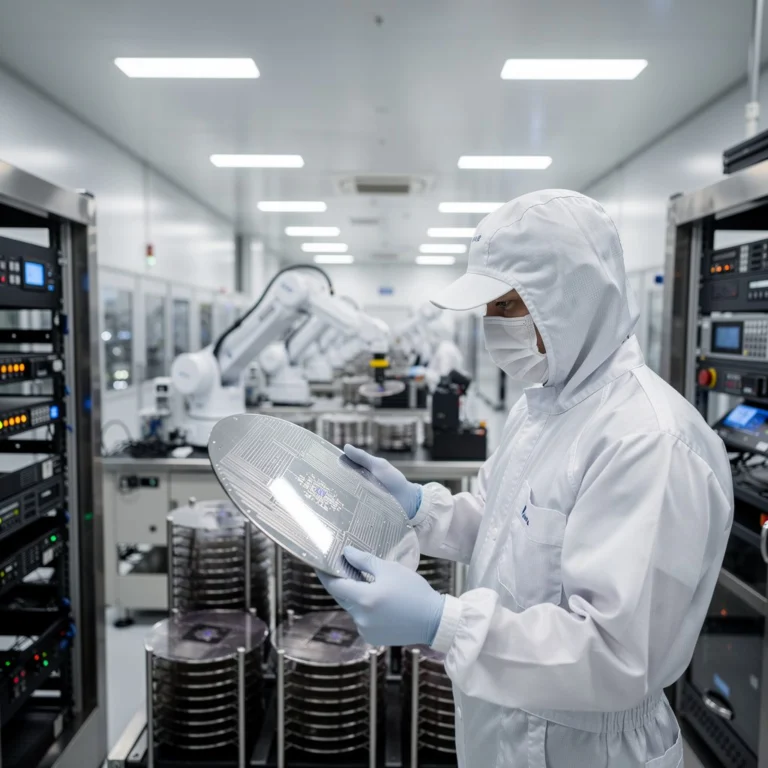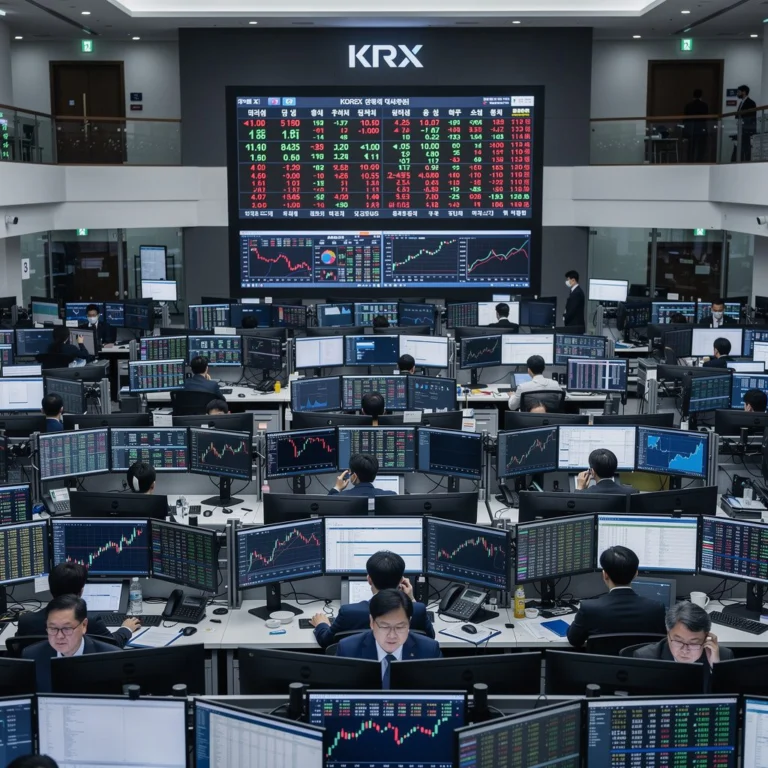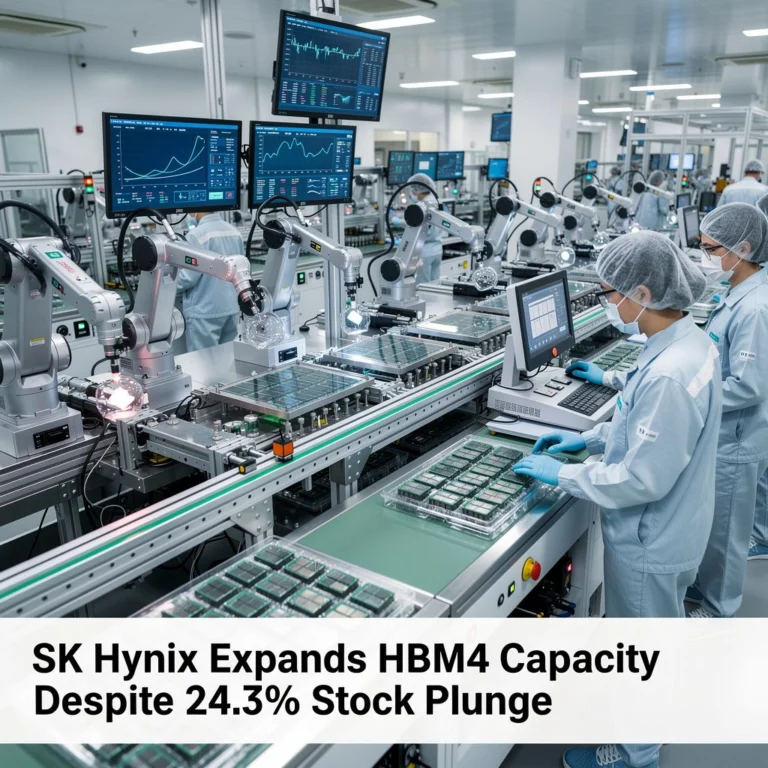

As of November 5, 2026, Nikkei’s analysis put global stock market capitalization at $154 trillion, down about $3.5 trillion (roughly 4,773 trillion won) on the day, Yonhap reported. Tokyo’s prime market then shed ¥77 trillion on November 6, and South Korea took Asia’s heaviest blow: after its circuit breaker fired 3 minutes 33 seconds after the open, the KOSPI closed 6.02% lower at 5,059.69.
Key Takeaways
- ▼ Nasdaq constituents alone shed about $2.5 trillion in one session, per Yonhap.
- ▼ The Philadelphia Semiconductor Index fell 12.2% to 9,011.14 on November 5 (U.S. time), ETNews reported.
- ■ Foreign investors sold more than 7.6 trillion won of the two Korean chipmakers over November 2 to 6.
- ▲ KRX 300 Communication Services gained 9.85%, and U.S. chip stocks reversed higher on November 6.
What happened in the global selloff?
Taiwan’s TAIEX fell 3,736.67 points, or 8.99%, right after the open on November 6, the biggest intraday drop on record for the island’s market, and TSMC slid as much as 9.82%, near its daily limit, per Yonhap. In the United States, the PHLX Semiconductor Index fell 12.2% to 9,011.14 on November 5, and that one-day loss was the biggest since March 16, 2020, according to ETNews.

Why did the midterm ‘blue wave’ hit AI-linked stocks?
ETNews says the dumping was triggered by concern that AI infrastructure expansion would be delayed after the Democrats’ midterm sweep. Yonhap describes spreading “concerns over tighter AI data-center regulation” after the midterms.
How hard did Samsung Electronics and SK Hynix fall?
At a 10:41 a.m. check on November 6, Samsung traded 7.59% down at 186,200 won and SK Hynix 9.89% down at 1,139,000 won, ETNews reported.
Over November 2 to 6 foreign investors sold more than 7.6 trillion won of the two stocks, according to Newsis. Samsung closed the week 16.13% lower at 188,700 won, down from 225,000 won on October 30, and its foreign ownership was 45.95% on November 6, the lowest since July 7, 2009, per Yonhap.
Which parts of the market gained?
Over November 4 to 6, KRX 300 Communication Services gained 9.85%, the best of any KRX index, per Yonhap. U.S. chip shares reversed on November 6: Nvidia rose 2.78%, AMD 11.04% and Micron 5.12%. At that close Samsung was 24.27% and SK Hynix 18.19% of KOSPI market capitalization, Newsis calculated.
What are analysts watching?
Yooanta Securities’ Lee Jae-won said a data-center construction delay and cancelled server and memory orders are separate issues, and that the plunge looks like excessive selling front-loading the worst case, Yonhap reported. Mirae Asset’s Seo Sang-young called the KOSPI historically undervalued relative to earnings, per the Seoul Economic Daily. Pepperstone said policy uncertainty, funding costs and power constraints leave it unclear whether the current pace of AI investment can hold, Newsis reported.
Frequently Asked Questions
Why did the circuit breaker fire in Seoul?
Trading was halted 3 minutes 33 seconds after the open on November 6 as the KOSPI slid as much as 8.78% intraday to 4,911.28 before closing 6.02% lower at 5,059.69, per Yonhap.
Which sectors rose during the selloff?
KRX 300 Communication Services gained 9.85% over November 4 to 6, according to Yonhap.
Have foreign investors cut their holdings of the two chipmakers?
Yes. They sold more than 7.6 trillion won of the two stocks from November 2 to 6, and Samsung’s foreign ownership was 45.95% on November 6, according to Yonhap.
Disclaimer: This article is for informational purposes only and does not constitute financial advice. Cryptocurrency investments carry significant risk. Always conduct your own research before making investment decisions.