

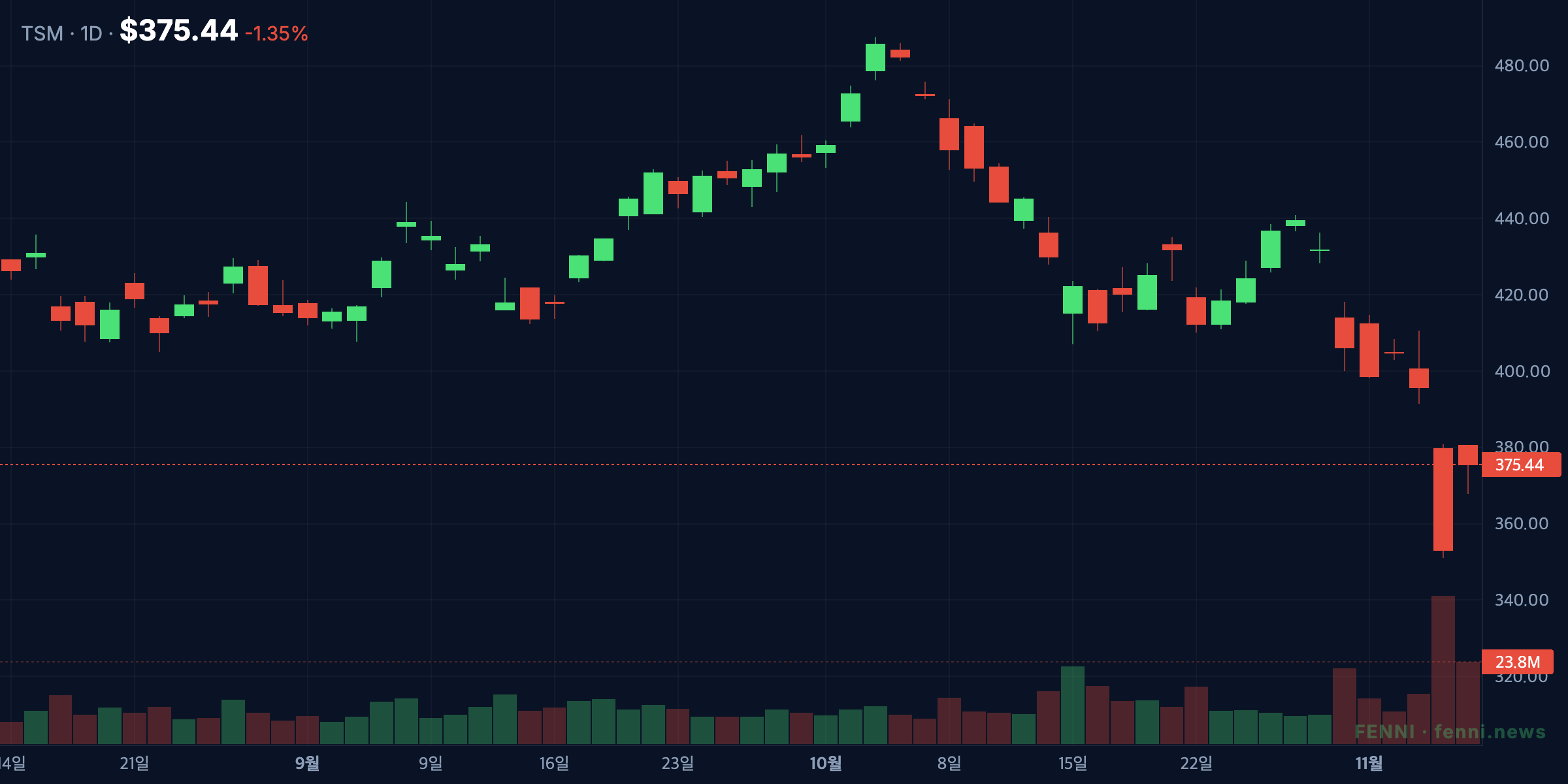
As of November 6, 2026, Taiwan Semiconductor Manufacturing shares had risen 5%, after The Information reported that the foundry group is weighing a move into advanced memory chips because Nvidia asked it to — a plan that would put it up against SK hynix, Samsung and Micron in a market known for its booms and busts. The jump came at the end of a bruising week: TSMC had fallen 10% on Thursday, November 5, as the chip rout deepened, and the PHLX Semiconductor Index had already fallen 12.15% for the week, its fifth straight weekly loss.
Key Takeaways
- ▲ TSMC shares rose 5% on November 6, 2026 on a report that it is weighing 3D DRAM production at Nvidia’s request.
- ▼ Memory is a far swingier business than foundry work: SK hynix earned a 77% gross margin over the last 12 months, a window whose start date is not stated, yet posted a 7.7 trillion won operating loss in 2023.
- ■ At Thursday’s close the selloff left TSMC at 16x forward earnings, below its five-year average of 18x.
- ■ The move remains a report, and the next hard numbers come with October sales and 2027 guidance.
The Report: 3D DRAM at Nvidia’s Request
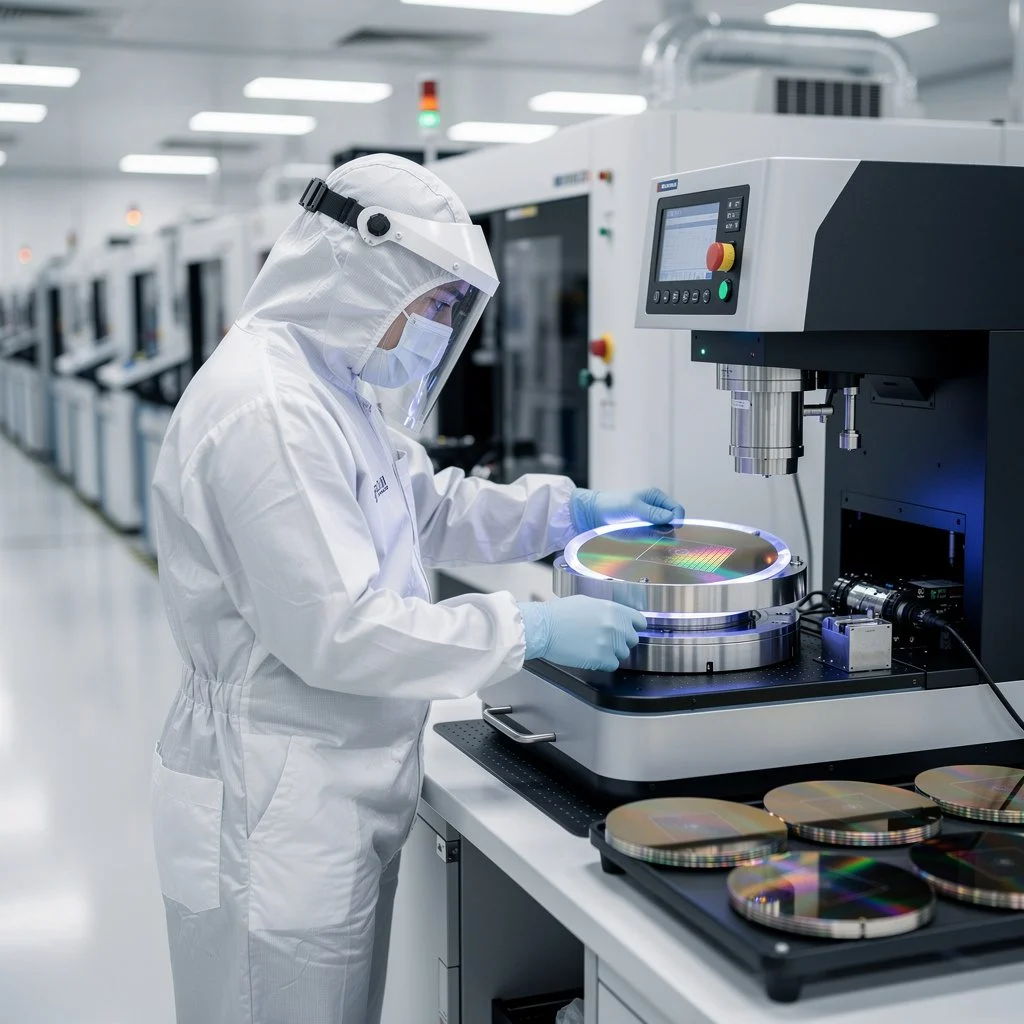
According to the Yahoo Finance account of the report, TSMC has reportedly started planning to make vertically stacked 3D DRAM for Nvidia. Tight memory supply has pushed hardware costs sharply higher, and the article frames the logic plainly: a fourth supplier would give Nvidia leverage in a market three companies have dominated for a long time.
The strategic wrinkle cuts both ways. In 2024 TSMC agreed to make the base logic dies for SK hynix’s next-generation high-bandwidth memory, so by the article’s framing a TSMC memory push would turn that partner into a rival for Nvidia’s business.
Why Did Chip Stocks Bounce on Friday?
TSMC was not alone. Business Insider reported that TSMC (TSM), Nvidia (NVDA) and Advanced Micro Devices (AMD) were up on Friday as the shares rebounded after a fall earlier this week, with the three up 6.73%, 6.23% and 11.92% respectively that morning. Nvidia rose 2.81% on Friday, November 6, 2026, closing at $186.71 after a $5.11 gain, according to 24/7 Wall St.
The drawdown behind the bounce was severe. Over five days TSM fell 12.81%, NVDA 9.5% and AMD 19.76%, per Business Insider. Nvidia’s rebound still left the stock with its fifth straight losing week, 21.96% below its October 6, 2026 record close of $239.24 — an estimated loss of about $1.27 trillion in market value, 24/7 Wall St. calculated.
The Rout Behind the Rebound — and Its Attributed Causes
Business Insider said the earlier-week drop was largely tied to the results of the U.S. midterm elections, reporting that Democrats succeeded in winning back control of the Senate from Republicans, which it said sparked concerns about AI growth. A separate Yahoo Finance report attributed the November 5 plunge to fears that Democratic gains would mean tougher scrutiny of data centers, noting that in 40 of 41 local ballot contests on November 3, voters favored limiting development, according to Ballotpedia.
Regional markets felt the same pressure. In that account South Korea’s KOSPI lost 6% on Friday while Taiwan’s benchmark dropped more than 8% during the week, its worst week in months; TSMC hit its daily limit-down threshold during the rout, and Reuters reported that Taiwanese officials asked state-owned banks to help support prices.

Valuation: Cheap Versus Its Own History, Not Versus Memory
The report landed on a stock already marked down. At Thursday’s close the drop left TSMC at 16x forward earnings, below its five-year average of 18x. Analysts expect its normalized EPS to climb from $10.65 in 2025 to $29.82 in 2028, and TSMC’s gross margin stayed above 50% every year from 2021 to 2025.
Memory economics are a different animal. SK hynix’s gross margin was 77% over the last 12 months, a window whose start date is not stated, yet in 2023 it posted an operating loss of 7.7 trillion won. Even the bullish case carries a caveat: none of this will show up in TSMC’s numbers for years, and this is still only a report.
What Should Investors Watch Next?
Sentiment is not settled. Michael Burry disclosed that he sold 25% of his put options on the VanEck Semiconductor ETF (SMH) after a sharp selloff across U.S. chip and technology stocks, while saying the remaining position has become very large — a trim the report’s author read as profit-taking rather than a call that semiconductors have bottomed. Bernstein’s Mark Li reiterated a Buy rating for TSM and raised his price target for the shares to $600 from $554, Business Insider reported.
On the calendar, Nvidia reports fiscal third-quarter 2027 results after the close on November 17, with guidance implying revenue of $108.0 billion ±2%, according to 24/7 Wall St.; its most recent report named supply, not weaker demand, as the main limit on growth. Technically, Yahoo Finance noted that the iShares Semiconductor ETF (SOXX) needs to get back above its 200-day average, near $477, to start repairing the damage — and that chip stocks have climbed in all eight midterm cycles since 1994, measured from the last October close through the following June.
Frequently Asked Questions
Did TSMC confirm plans to make memory chips?
No confirmation was reported. The move was reported by The Information and relayed by Yahoo Finance, which described TSMC as weighing a move into advanced memory chips because Nvidia asked it to, and as having reportedly started planning vertically stacked 3D DRAM for Nvidia.
How much did TSMC stock fall before Friday’s rebound?
TSMC fell 10% on Thursday as the chip rout deepened, according to Yahoo Finance; Business Insider put TSM’s decline at 12.81% over five days before the recovery.
Why do memory margins matter for TSMC’s risk profile?
Memory makers ride much bigger waves: SK hynix’s gross margin was 77% over the last 12 months, yet it posted an operating loss of 7.7 trillion won in 2023, the Yahoo Finance report noted.
Disclaimer: This article is for informational purposes only and does not constitute financial advice. Cryptocurrency investments carry significant risk. Always conduct your own research before making investment decisions.