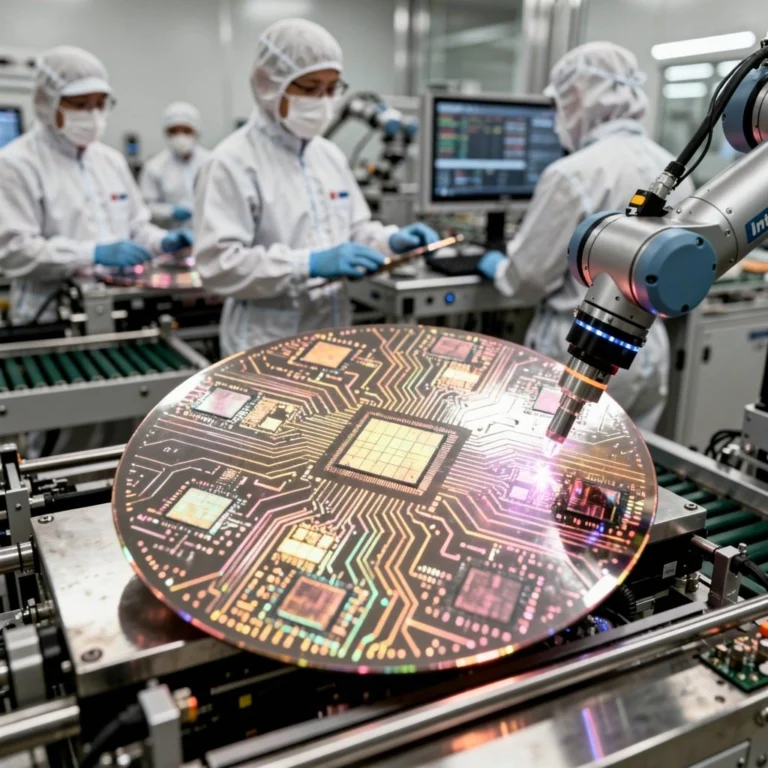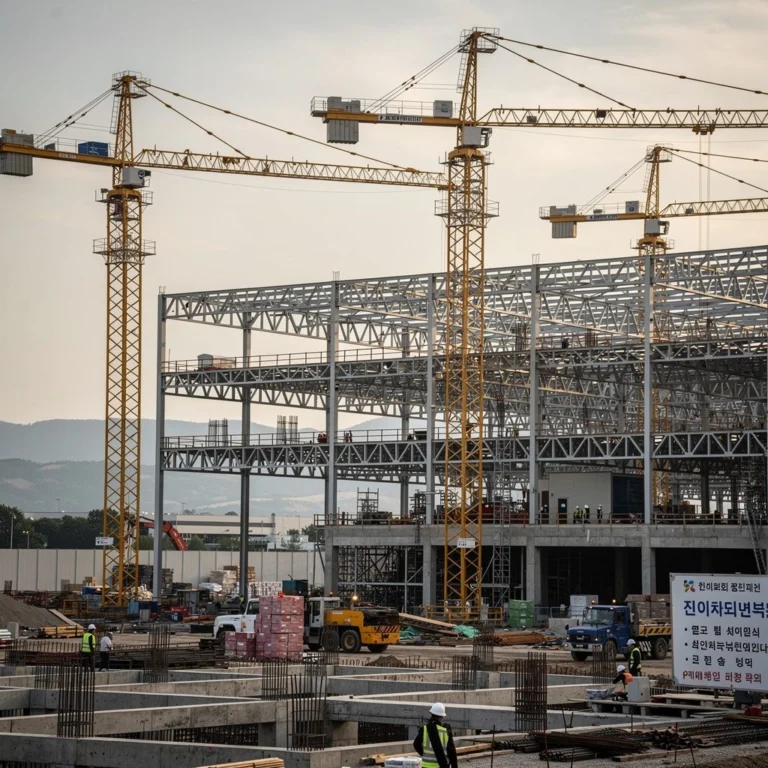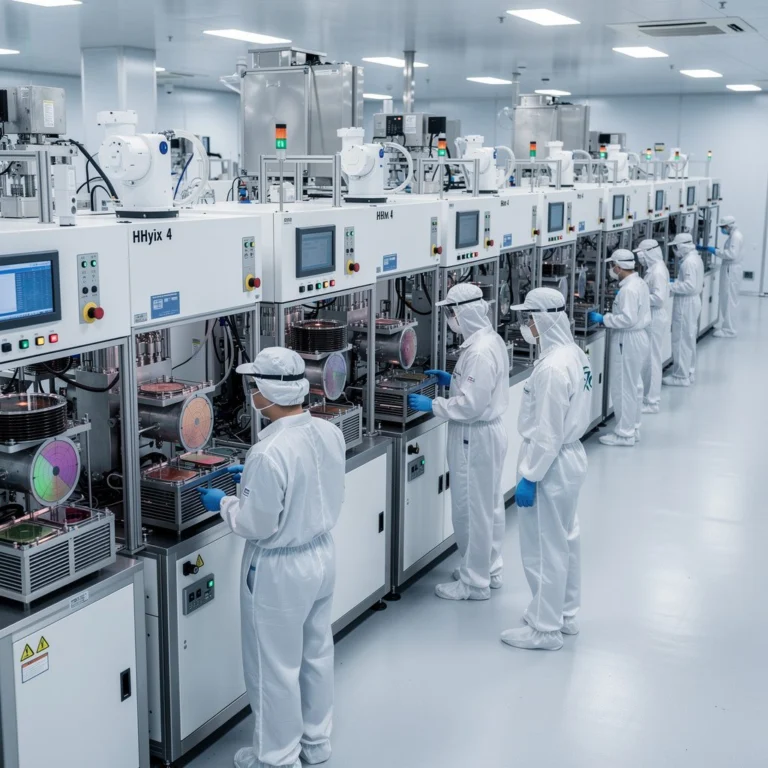

As of November 3, 2026, Samsung Electronics will make the high-bandwidth memory (HBM) base dies it supplies to AMD and Nvidia at its Taylor fab in Texas, and the entire output of the second plant there has been booked for those two customers — an order that gave the company a reason to break ground this month. The same session handed down the opposite verdict from equity investors: the Kospi closed 3.59% lower, with Samsung down 4.15% and SK hynix down 5.03%, as AI investment costs and profitability drew fresh scrutiny.
Key Takeaways
- ▲ Samsung has taken Taylor 2’s entire output as HBM base dies for AMD and Nvidia, with construction starting this month.
- ▲ Foundry results are improving: 4nm HBM4 base-die sales lifted third-quarter revenue and profitability versus the second quarter.
- ▼ Nvidia’s push to move NVHBM base-die production to TSMC is flagged as a limit on further Samsung orders.
- ▼ Korean chip shares fell on November 3 as AI funding concerns resurfaced, despite sold-out memory demand.
- ■ AMD is separately discussing 2nm cooperation with Samsung for Sony’s next-generation console chip.
What the Taylor 2 order actually covers
Industry sources told the November 3 reporting that Samsung booked Taylor 2’s entire production volume as HBM base dies for AMD and Nvidia. The base die is the logic layer of an HBM stack, built by the foundry arm as a discrete product and later married to DRAM made in Korea.
The commitment shows up in the schedule. The plant applies a 2nm-class process and is about 1.5 times the footprint of the first Taylor fab at 2.7 million square feet, Maeil Business Newspaper reported. Construction starts this month, with equipment move-in from February 2029 and mass production in 2030.
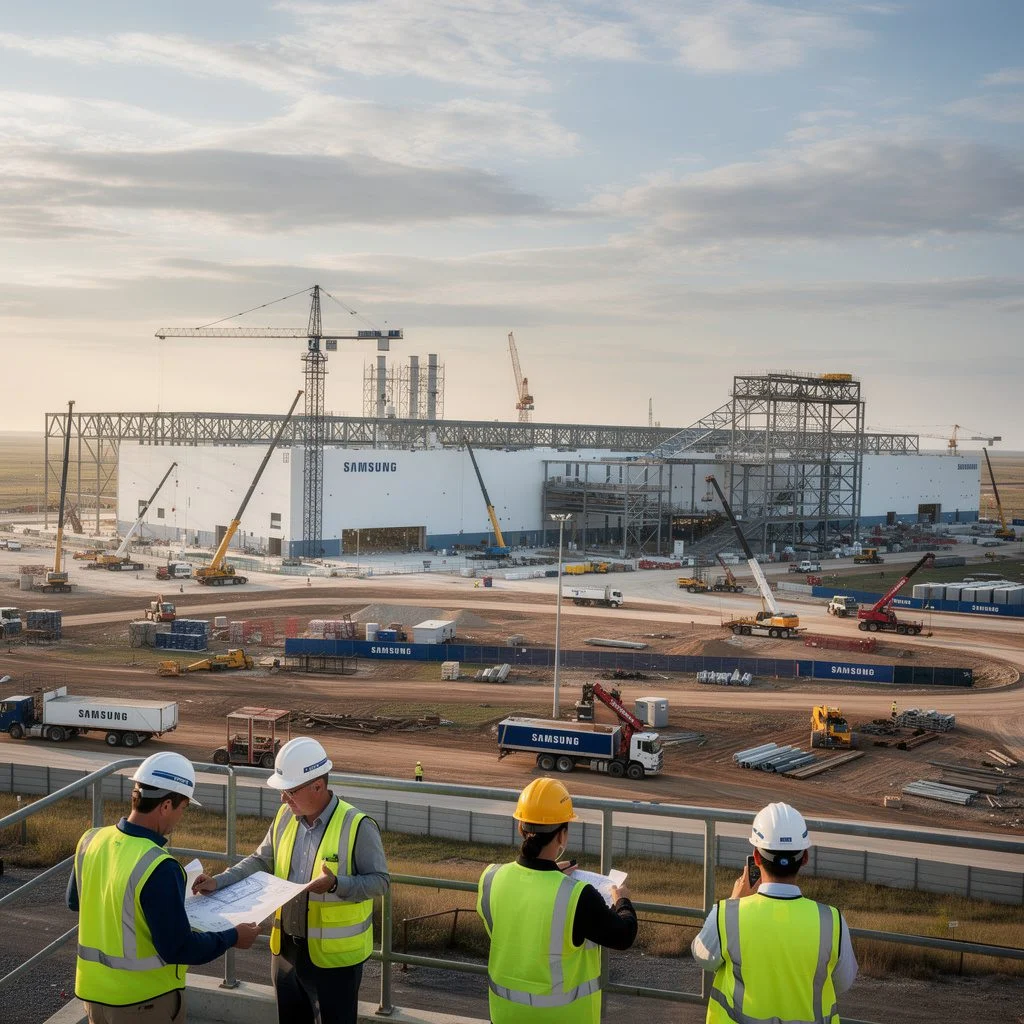
Secured volume is mostly AMD’s base dies, and absorbing that load already leaves capacity tight. HBM4 in production and HBM4E sampling use 4nm base dies; Taylor 2 is expected to serve next-generation HBM at 2nm or below.
Why the base die became a foundry business
Base-die design and manufacturing determine how fast a stack runs and how efficiently it uses power, pushing buyers to order the logic layer separately from the DRAM. Third-quarter numbers showed the effect: Herald Business reported that 4nm HBM4 base-die sales growth helped the foundry arm improve both revenue and profitability versus the second quarter.

Management also guided that 2nm order projects will more than double this year and that HPC will exceed 50% of revenue next year — company forecasts, not reported results.
AMD is becoming the anchor customer
The relationship runs past the base-die order. Business Post reported that AMD is discussing 2nm cooperation with Samsung for Sony’s next-generation console chip — a negotiation, not a signed contract.
The same report frames the opening: TSMC’s capacity limits and rising prices are turning big tech toward Samsung and Intel. Samsung’s foundry remains the laggard, estimated to have lost about KRW 5 trillion last year and behind TSMC on share because of yields — the low base these orders are recovering from.
Demand is sold out, and the market still sold the shares
Memory supply makes the order credible. Samsung said it expects to reach demand equal to 60-70% of total capacity through 2030 via long-term supply agreements, and SK hynix has said its HBM and DRAM output is already sold through 2029, Money Today reported. PC generic DRAM contract prices hit a record $27.5, roughly four times the year-earlier level.
Investors priced the cost side instead. The Kospi closed at 5,648.79, down 3.59%, Newsis reported, with foreign investors net selling KRW 1.5296 trillion. The cited reports attribute the slide to the debate over AI investment costs and profitability, not to the order book.
US trading the prior session had set the tone: AMD fell 7.52% and Intel 8.80%, and Oracle dropped 8.76% after announcing a $20 billion fundraising plan, News1 reported. Samsung traded 5.02% lower at KRW 217,500 at 9:09 a.m. on November 3 — an intraday snapshot, not a close.
What to watch next
- Whether Nvidia’s request to outsource NVHBM base dies to TSMC caps Samsung’s follow-on orders.
- Whether the AMD-Sony 2nm discussions convert into confirmed production plans.
- Whether the 2nm order pipeline doubles this year as management guided.
Frequently asked questions
What is an HBM base die?
The logic layer of a high-bandwidth memory stack. Its design and process set the stack’s speed and power efficiency, which is why buyers increasingly order it separately from the DRAM.
When does the Taylor 2 fab start producing?
Construction begins this month. Equipment move-in is planned from February 2029, with mass production slated for 2030.
Why did Samsung shares fall despite the order?
The decline tracked a broad Kospi drop attributed in the cited reports to concerns about AI investment costs and profitability, not to any change in the order or memory demand.
Disclaimer: This article is for informational purposes only and does not constitute financial advice. Cryptocurrency investments carry significant risk. Always conduct your own research before making investment decisions.